Showing posts with label modernisation. Show all posts

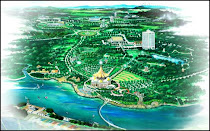
Sanctuary Hotel and Mall Kuching development


The building going to replace the current Ceko Market and Brooke Dockyard. The extent of adjacent old shops along Gambier Street and Jalan Pasar affected is unknown. I'd say the larger old precinct is threatened. Large part of Kuching's history will be erased.

See post Old Ceko Market (before)
See post Old Ceko Market (after)
See post Kuching waterfront and the old market
See external link Last day of Ceko Market


See link for more detail:
Kucing Berjanggut: Sanctuary Hotel and mall Kuching

An argument of our Contemporary City = Generic City

These are some of the important quotes argue against the current trend cities are transforming into modern monoculture:

"[Tragedy] I don't believe anyone will ever be able to make any city council understand that from an urbanistic point of view, the most attractive parts of the city are precisely those areas where nobody has ever done anything. I believe a city, by definition, wants to have something done in those areas. That is the tragedy." quote by Architect Rem Koolhaas & Designer Bruce Mau, published at S,M,L,XL

"The loss of Singapore's historic center foreshadows a disturbing global phenomenon. It is sad enough when a people and a city expunge their own cultural achievements, but in the twentieth century, throughout the world, where historic architecture in old cities is lost, it is frequently replaced with the new architecture of an international modern monoculture. Whether in northern or southern climates, in Asia, African, European, or American cultures, the generic buildings of modern development change little in response to their geographic and social surroundings. Just as American fast-food chains offer identical dishes, with the same names, in the same wrappers, by waiters in matching uniforms, so most of the new architecture of Singapore primarily reflects the economic formulas of modern speculative development." quote by Anthony Tung, published at Preserving the World's Great Cities. The destruction and renewal of the historic metropolis

From Louisana Manifesto, architect Jean Nouvel stated : "In 2005, more than ever, architecture is annihilating places, banalizing them, violating them. Sometimes it replaces the landscape, creates it in its own image, which is nothing but another way of effacting it. "........ "The global economy is accentuating the effects of the dominant architecture, the type that claims “we don’t need context”. And yet debate on this galloping frenzy does not exist: architectural criticism, invoking the limits of the discipline, is content with aesthetic and stylistic reflections devoid of any analysis of the real, and ignores the crucial historical clash that – more insistently every day – sets a global architecture against an architecture of situations, generic architecture against an architecture of specificity. Is our modernity today simply the direct descendant of the modernity of the 20th century, devoid of any spirit of criticism? Does it consist simply of parachuting solitary objects on to the face of the planet? Shouldn’t it rather be looking for reasons, correspondences, harmonies, differences in order to propose an ad-hoc architecture, here and now? " ......."In the name of the pleasure of living on this Earth, we must resist the urbanism of zones, networks and grids, the automatic rot that is obliterating the identity of the cities of all continents, in all climates, feeding on cloned offices, cloned dwellings, cloned shops, thirsting for the already thought, the already seen in order to avoid thinking and seeing."

"Distinctiveness is key, for although cities draw from each others' experiences the danger is that pioneering cities around the world quickly become textbook case studies for city officials. Cities then tend to adopt generic models of success without taking into account the local characteristic and conditions that contributed to those successes. The result is a homogeneous pastiche of buildings - aquariums, convention centres, museums, shops and restaurants - that prove to be remarkably similar the world over." Quoted from The Creative City: A Toolkit for Urban Innovators

Diminishing way of life #1 - Beijing

It is not hard to find a beautiful scene like this in Italy where locals still live in traditional way (even in the cities) and this way of life will go on pretty much forever.

In China, its own unique cultural heritage and the way of life will be diminished in the name of modernisation.

Click photo to view original photo and narration at Flickr.

Destruction of Kyoto's old quarters

There is always a lesson to learn from. Kyoto, a city that is too late to revert back to its original grandeur but it is hope that history is not repeating in future to its remaining heritage also to any other cities around the world.

Unfortunately, Beijing city is the next victim.

A Japanese friend once told me (Alex Kerr), "I always associated old Japanese houses with an image of poverty. When I saw Tenmangu I realised for the first time that one could live well in an old house." The key to the destruction of the city of Kyoto lies in this comment. In the eyes of the city administration, rows of old wooden houses look 'poor'; they are an embarrassment, and should be removed quickly. This is not only true for Kyoto - the same feeling lurks deep in the hearts of people all over Japan. If this were not so, the rampant destruction which has occurred here would have sparked a strong public outcry; but until recently there has been hardly a peep of protest. Alex Kerr

'Lost Japan' by Alex Kerr. Winner of Japan's 1994 Shincho Gakugei Literature Prize.


"Of course there was nothing wrong with wanting to "modernize the environment in which people lived, in the sense of making it more hygienic, more comfortable, more practical. But the question is, was it really necessary to destroy so much of the traditional environment and culture in the interest of modernization?" Matsahumi Yamasaki

Kyoto: Its Cityscape, Traditions and Heritage: Process Architecture
 

blogger templates |